

Thirty Feet Down: What Scuba Diving Taught Me About Letting Go
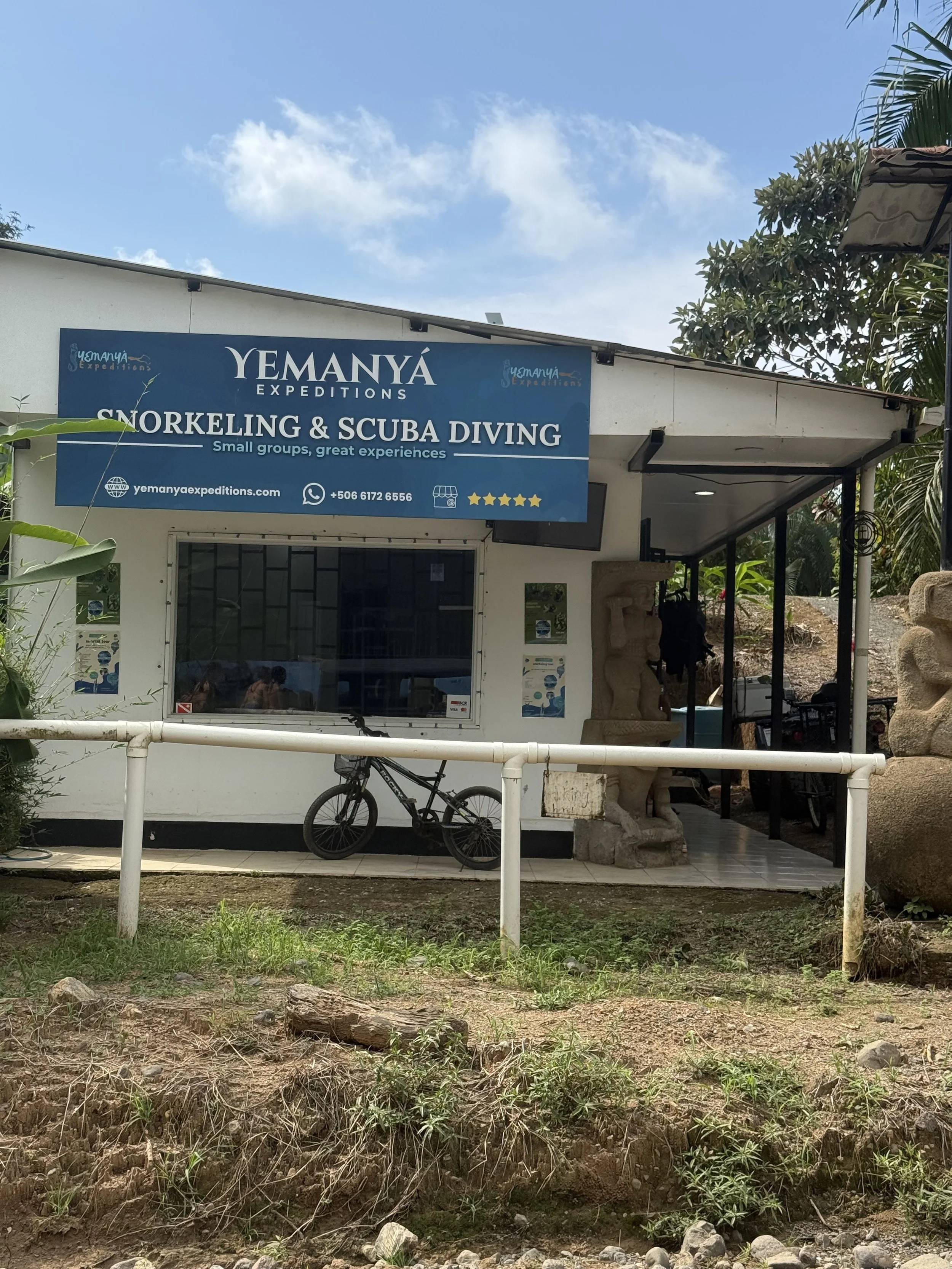
Dive school, Costa Rica. Where I learned that the one rule is to never hold your breath.
Recently, I went scuba diving for the first time.
I’ve been sitting with how to write about this experience ever since. Not because it’s complicated, but because what happened thirty feet below the surface of the ocean was so much more than a first-time experience. It was an initiation. A conversation between me and water that has been happening my whole life, one that finally went somewhere I’d never been before.
The Water Has Always Known Me
My mother and I have always shared a love of water. Since I was a child, the ocean, the pool, anywhere there was water, we were there. There was something about being in it together, the way it held us both the same regardless of whatever else was happening in our lives. The water never asked us to be anything other than present. It just received us.
Water is a powerful element. Emotionally, energetically, spiritually, it is associated with feeling, with flow, with what lives beneath the surface of things. I’ve always felt most like myself near water. Most quiet, open, and free.
So when I found myself in Costa Rica, and the opportunity to scuba dive presented itself, I said yes.
That’s the thing about water. It has always known how to call me in.
The water never asked us to be anything other than present. It just received us.
What It Means to Be Thirty Feet Down
There is a difference between being at the beach and being in the ocean. And there is an even greater difference between being in the ocean and being thirty feet below its surface.
When you descend, something happens that I wasn’t prepared for. The world above, the noise, the light, the busyness of being a person with responsibilities and a schedule and a phone all of it starts to fall away. Not gradually but suddenly. One moment you are at the surface. The next, you are somewhere else entirely.
The silence below is unlike any silence I’ve experienced on land. It isn’t the absence of sound; it’s the presence of stillness. You can hear your breath. You can hear your heartbeat. You can hear the water moving around you in ways you never notice from above. Everything that was competing for your attention moments before becomes completely irrelevant.
And then there is the life. The marine life that exists in that world going about its rhythm, its purpose, its being, completely unbothered by the chaos that exists above the waterline. A fish doesn’t rush, a coral doesn’t perform. Everything below moves at exactly the speed it was designed to move at.
Being thirty feet down in someone else’s home, the ocean’s home, the creatures’ home, humbled me in a way I didn’t expect. You are a guest there. And being a guest in that space reminded me of how we move through each other’s spaces on land, how we enter rooms, relationships, communities. There is a way of being in someone else’s world that requires a particular kind of reverence. A slowing down, recognition that not everything exists for you, and that is not a loss; it is a gift.
Everything below moves at exactly the speed it was designed to move at.
Surrendering Control
If I’m honest, I like to be in control. Not in the way that looks like dominance or rigidity from the outside; most people who know me would describe me as calm, adaptable, capable. But inside, there is a version of me that is always tracking. Always anticipating, making sure that whatever is happening, I have a handle on it. That I’ve accounted for the variables. That I won’t be caught off guard.
Control, for me, has never really been about power. It’s been about safety. When you learn early that things can change without warning, that plans fall through, that people leave, that the ground shifts, you develop systems. You get good at managing. You become someone others can rely on because you’ve made yourself into someone who doesn’t fall apart.
The ocean doesn’t negotiate with that version of me.
Thirty feet underwater, floating in a current that is larger and older and more powerful than anything I will ever be, there is simply no room for the illusion of control. You cannot manage the ocean. You cannot anticipate its movements or prepare for every variable. You can only be in it; you can only float.
And floating, truly floating, surrendering your weight to something that will hold you without you having to earn it, is one of the most confronting things I’ve ever done.
Because floating requires trust. It requires you to believe, in your body and not just your mind, that you will be held. That letting go will not mean falling. That the thing you’ve been gripping so tightly, the sense of having it together, the performance of capability, the weight of being the one who figures it out can be set down. At least for now. At least here.
I thought about what I’ve been carrying. The invisible weight of over-functioning. The exhaustion of always being the one who handles it. The part of me that struggles to receive support without immediately wondering what it will cost, or whether I deserve it, or whether the other person will eventually realize I’m too much to hold.
The ocean held me anyway.
There is something the water teaches you about ego, not by lecturing you about it, but by simply being larger than it. In the presence of something that vast, the ego quiets. Not because it’s been defeated, but because it finally recognizes that it was never the point. That there is something bigger moving through everything, and our job is not to control it but to move with it. To trust it, to let it carry us somewhere we couldn’t have reached by gripping.
Floating requires you to believe, in your body and not just your mind, that you will be held.
The Breath Keeps You Alive
There is one rule in scuba diving that your instructor will tell you before you go anywhere near the water. Never hold your breath.
It sounds simple. It sounds like something you wouldn’t need to be told. But thirty feet down, with a tank on your back and a regulator in your mouth, the pressure of the water around you, and the unfamiliarity of breathing in a way your body has never breathed before, the instinct to hold your breath when something surprises you is real. It is immediate; it is human.
And it is the one thing that can hurt you.
Holding your breath underwater creates pressure in your lungs that the body cannot manage. The solution, the only solution, is to keep breathing.
Steady and consistent. Even when you’re scared, even when you’re disoriented, even when the gear feels wrong, or the current shifts or you can’t find your footing because there is no footing, there is only water.
I have thought about this every day since I surfaced.
Because I do this on land. When pressure builds, when a conversation gets hard, when a deadline appears, when I feel overwhelmed by the weight of everything I’m holding, I hold my breath. Not literally, most of the time. But energetically. I contract, tighten, go into management mode, stop feeling, and start surviving.
The breath is the thing that keeps you present. It is the thread between your body and your mind. It is the signal to your nervous system that you are okay, that this moment, whatever it contains, is survivable. That you do not need to brace against it. That you can move through it the way water moves through everything, not by force, but by finding the path that’s already there.
I’ve been practicing this since I got home. Not just in meditation or in sessions. In the moments when the gear of life feels like too much. When the plan changes, and I feel the familiar tightening, when I catch myself beginning to hold.
I breathe instead.
Slowly, steadily; the way I learned thirty feet down.
The breath is the signal to your nervous system that you are okay; that this moment, whatever it contains, is survivable.
When I got back, I called my family to tell them about my experience.
The descent, the silence. About the moment I stopped fighting the current and let it carry me. About the fish that swam so close I could have reached out and touched it, and how I held still instead, understanding without words that I was a guest in its world.
Their response was “wow, I can’t believe you did that, but it’s you, so I’m not surprised”; I could hear the amazement in their voices. As I heard their reactions over the phone and saw their smiles on video calls, all I could think to myself was, “The water always knows what you need.”
It always has.
This season of my life is full of firsts. Scuba diving was one of them. And what I’m learning, first by first, is that the things I’ve been most afraid of are usually the things that have the most to teach me. That the places I’ve been most reluctant to enter are often exactly where I needed to go.
You don’t have to have it all figured out before you descend.
You just have to keep breathing.
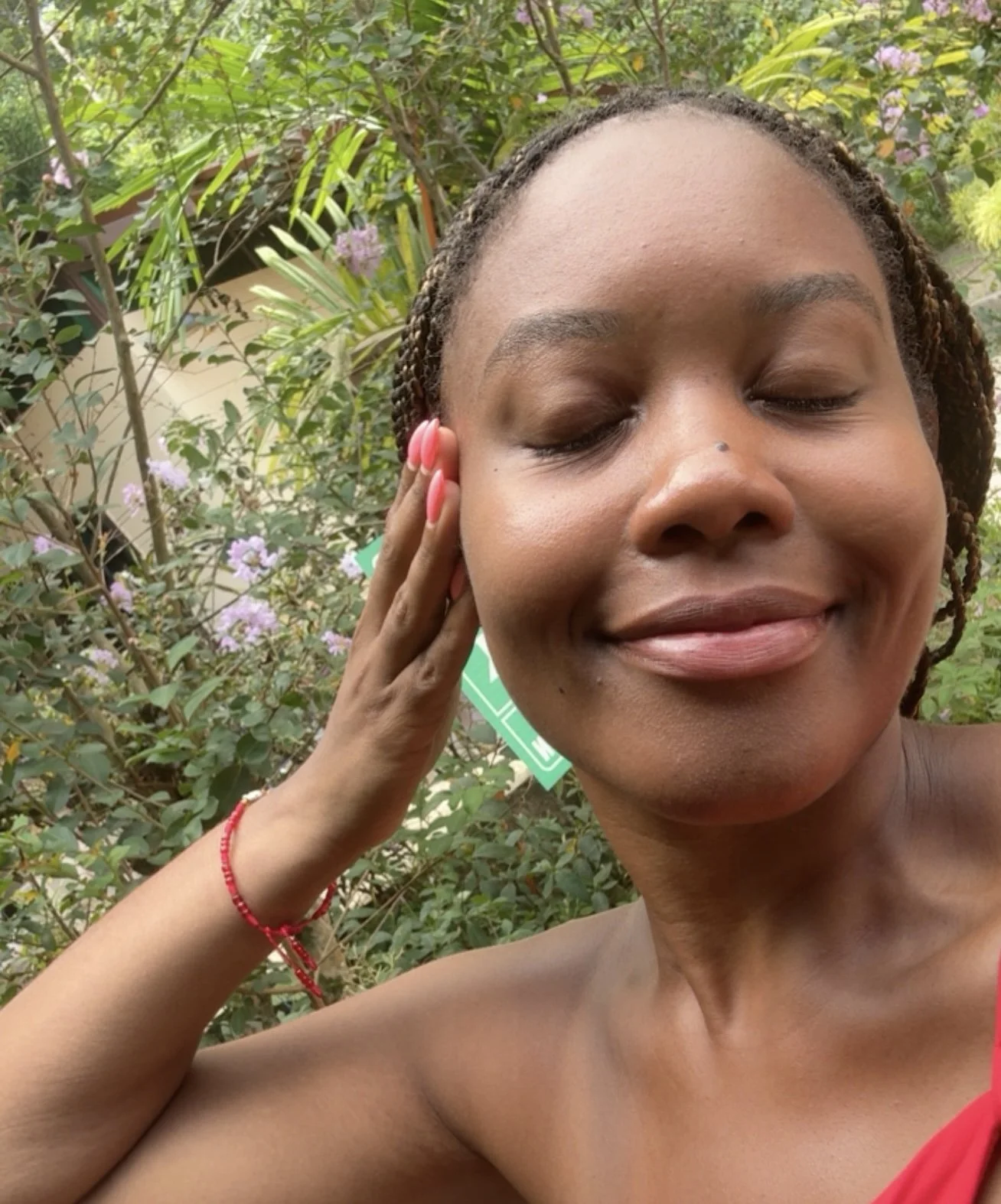
Back on shore. Thirty feet down and back again. The water always knows what you need.